

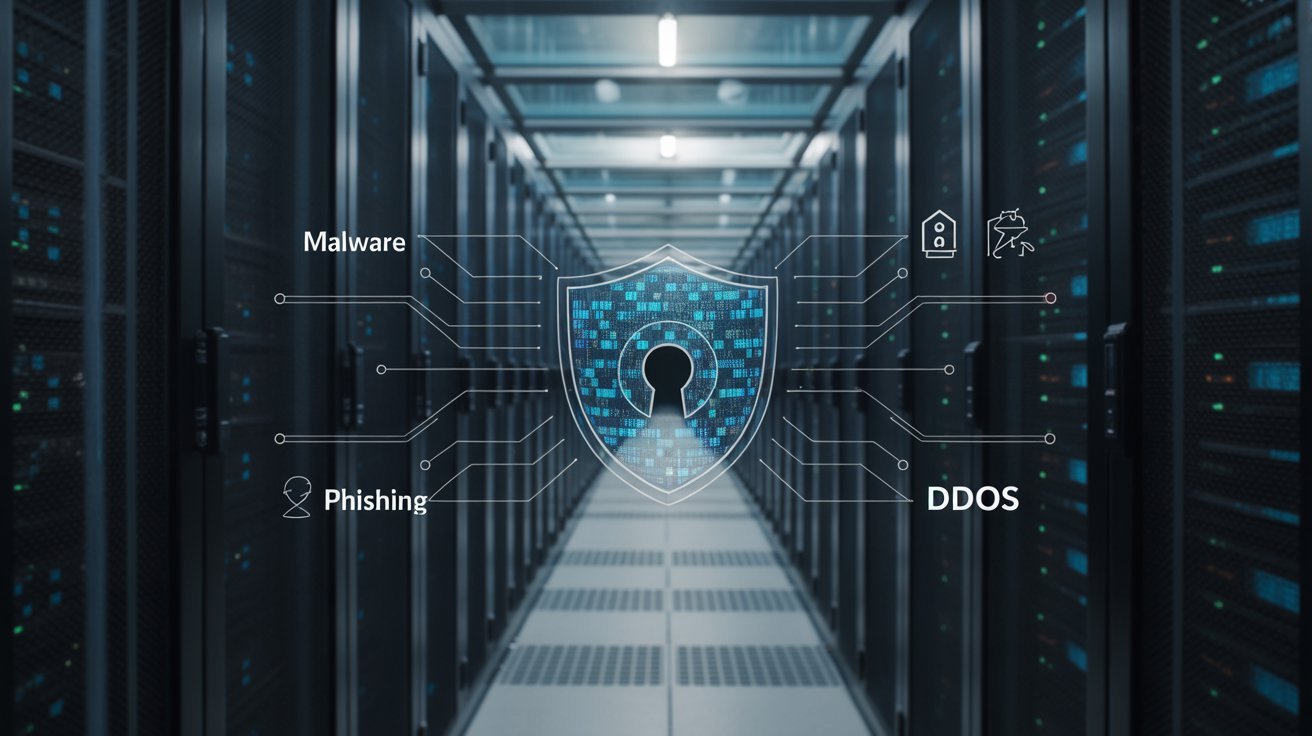
Modern businesses operate in an environment where Network Security Threats are evolving faster than ever. Attacks such as ransomware, phishing, and zero-day exploits target networks of all sizes, making it essential for organizations to stay proactive. Ignoring these risks can lead to data breaches, downtime, and financial losses.
This blog serves as a practical guide to understanding the most common threats and implementing effective Network Security Prevention measures. Covenant Techsys provides reliable Network Security Services and comprehensive Network Security Solutions to protect critical data and maintain uninterrupted operations for businesses looking for expert support.
Why Understanding Network Security Threats Matters
Ignoring Network Security Threats leads to data loss, downtime, and compliance issues that can cripple operations. Many companies still assume small businesses aren’t targets, but attackers focus on them precisely because defenses are weaker.
The volume of Common Network Security Threats from ransomware to phishing to zero-day exploits keeps rising every year, making it essential for organizations to understand the Types of Network Security Threats they face. Clear awareness is what allows effective Network Security Prevention and helps businesses implement stronger controls, policies, and Network Security Services before an attack occurs.
Most Common Network Security Threats
1. Malware & Ransomware Attacks
Malware & Ransomware attacks enter through email attachments, risky downloads, and endpoint security threats on unmanaged devices. Ransomware encrypts critical data and forces businesses into downtime or payout demands. This type of of Common Network Security Threats keeps growing because attackers automate delivery and target every industry.
2. Phishing & Social Engineering
Human error is the easiest entry point. Phishing and social engineering threats trick employees into revealing credentials or installing malware, often bypassing strong technical defenses through simple manipulation.
3. DDoS (Distributed Denial of Service) Attacks
Attackers flood networks with massive traffic, disrupting availability and halting business operations. Effective DDoS attack prevention is essential for keeping services online.
4. Man-in-the-Middle (MitM) Attacks
In these attacks, criminals intercept communication between users and servers especially on public Wi-Fi or unencrypted networks. Strong encryption is the core of man-in-the-middle attack protection.
5. Insider Threats
Employees, negligent or malicious, cause some of the most damaging breaches. Insider threats in network security include misconfigurations, unauthorized access, and credential misuse.
6. Zero-Day Vulnerabilities
A zero-day is a newly discovered flaw with no patch available. Attackers move fast and exploit zero-day vulnerabilities before businesses can update systems.
7. Unsecured Endpoints (Laptops, Mobiles, IoT)
More devices mean more exposure. Unmanaged personal laptops, mobile devices, and IoT equipment increase Network Security Risks, especially in remote and hybrid work setups.
8. Weak Passwords & Credential-Based Attacks
Passwords leaked in breaches lead to brute force and credential stuffing. Weak password security risks make MFA non-negotiable for Network Security Prevention and overall business safety.
How to Prevent Network Security Threats
1. Deploy a Strong Firewall & Traffic Filtering
A modern NGFW adds application-layer inspection, advanced filtering, and Firewall and IDS/IPS security to block malware, intrusions, and unauthorized access. It forms the first layer of Network Security Prevention and stops many Types of Network Security Threats before they enter the network.
2. Use IDS/IPS for Real-Time Threat Detection
IDS/IPS tools identify suspicious behavior, provide automated mitigation, and help block exploitation attempts, including early moves linked to zero-day vulnerabilities. This improves threat detection and prevention tools across the entire environment.
3. Implement Endpoint Security & Patch Management
Every device must be protected. Strong endpoint tools, continuous patching, and configuration control reduce Network Security Risks and limit exposure to malware and ransomware attacks or unauthorized access attempts.
4. Enforce Multi-Factor Authentication (MFA)
MFA prevents weak password security risks from turning into full credential-based breaches. Even if passwords leak, attackers can’t log in without the second authentication factor.
5. Secure Remote Access with VPN & Encryption
Encrypted VPN access protects remote teams and blocks man-in-the-middle attack protection issues on public or unsecured networks. This ensures safe communication and supports How to secure business networks in hybrid work setups.
6. Use SIEM for Centralized Monitoring & Incident Response
A SIEM platform offers real-time log analysis, event correlation, and rapid incident alerts. Effective network monitoring and SIEM reduces response time and strengthens overall visibility.
7. Conduct Employee Security Awareness Training
Training reduces phishing success rates and minimizes errors related to phishing and social engineering threats. Well-trained staff can stop many Common Network Security Threats before they escalate.
8. Apply Zero Trust Principles
Zero Trust operates on a simple rule: never trust, always verify. It restricts lateral movement, protects against insider threats in network security, and aligns with modern Network Protection Methods.
Best Practices to Keep Your Network Secure (Practical, Actionable Checklist)
Security fails when consistency fails. These practices close the most common gaps and keep your network hard to break into.
1. Regular Vulnerability Scanning
Attackers hunt for outdated software, open ports, weak configurations, and unpatched systems.
If you don’t scan regularly, you’re basically blind.
What to do:
- Run internal + external scans monthly.
- Test firewalls, endpoints, servers, and cloud apps.
- Fix high-risk vulnerabilities immediately, not “when time allows.”
- Track recurring issues they signal deeper configuration problems.
2. Strong Password Policies
Weak passwords are still one of the top attack vectors. Brute force and credential stuffing break into networks because companies ignore the basics.
What to do:
- Enforce minimum length (12–14 characters).
- Block common and previously breached passwords.
- Require periodic password rotation.
- Combine with MFA, passwords alone are never enough.
3. Controlled Access Privileges
When users have more access than they need, one compromised account is enough to wreck the entire network.
What to do:
- Apply least-privilege access for every role.
- Remove old, inactive, or temporary accounts immediately.
- Segment access, finance shouldn’t access dev systems, and vice versa.
- Review user permissions quarterly.
4. Data Backups & Disaster Recovery
Ransomware isn't a “maybe”, it’s a “when.” A solid backup strategy is the only reason companies survive an attack.
What to do:
- Maintain offline and cloud backups (3-2-1 rule).
- Encrypt backups end-to-end.
- Test restore processes, not just backup jobs.
- Maintain a documented disaster recovery plan with RPO/RTO clearly defined.
5. Continuous Monitoring
You can’t stop what you can’t see. Attackers often stay inside networks for weeks before striking. Monitoring keeps that window close to zero.
What to do:
- Monitor network traffic, logs, endpoints, and authentication attempts.
- Track unusual behavior: sudden data transfers, login spikes, unknown devices.
- Use automated alerts to flag suspicious patterns instantly.
- Integrate monitoring with SIEM for central visibility.
6. Documentation & Audits
Poor documentation leads to misconfigurations. Misconfigurations lead to breaches. Regular auditing keeps your setup clean and compliant.
What to do:
- Document network architecture, policies, firewall rules, and access lists.
- Audit configurations at least twice a year.
- Review compliance requirements (ISO, GDPR, PCI DSS, whatever applies).
- Store change logs to trace errors or security gaps.
When Should a Business Seek Professional Network Security Services?
Most businesses wait until something breaks before calling experts and that’s exactly why the damage becomes expensive. You bring in professional Network Security Services the moment your internal team can’t keep up with evolving threats.
Clear Signs Your Business Is Already at Risk
- You’re seeing repeated security alerts with no clear root cause.
- There’s unknown or suspicious traffic hitting your network.
- Systems randomly slow down, freeze, or disconnect.
- Employees report phishing attempts, unusual logins, or account lockouts.
- Your team struggles to keep patches, firewalls, and endpoint tools updated.
- You don’t have 24/7 monitoring or a dedicated security expert.
Why Expert-Managed Security Prevents Major Losses
Professional security teams reduce risk because they handle what internal IT teams usually miss:
- Continuous monitoring to detect threats early
- Faster incident response
- Proper configuration of firewalls, IDS/IPS, MFA, VPN, and SIEM
- Regular audits and vulnerability assessments
- Reduced downtime, reduced attack surface, reduced recovery cost
Most importantly, they close the gaps that attackers exploit while giving you predictable, structured protection.
If your network already shows warning signs or you want preventative protection, you should consider a trusted provider like Covenant Techsys. Their Network Security Services and Managed Network Security Services help businesses stay secure without burning internal resources.
Conclusion
Network Security Threats are constantly evolving. Attackers adapt quickly, creating new Types of Network Security Threats and exploiting any gap in your defenses. That’s why a reactive approach isn’t enough; businesses need a layered, proactive defense to protect data, systems, and digital operations.
Implementing best practices like firewalls, IDS/IPS, endpoint protection, MFA, VPNs, and employee training is critical. But to truly stay ahead, partnering with experts ensures continuous monitoring, threat detection, and rapid response when risks arise.
Evaluate your organization’s current security posture today. Covenant Techsys offers comprehensive Network Security Services and a complete Network Security Solution designed to safeguard your business from cyberattacks, ensure compliance, and maintain uninterrupted operations.